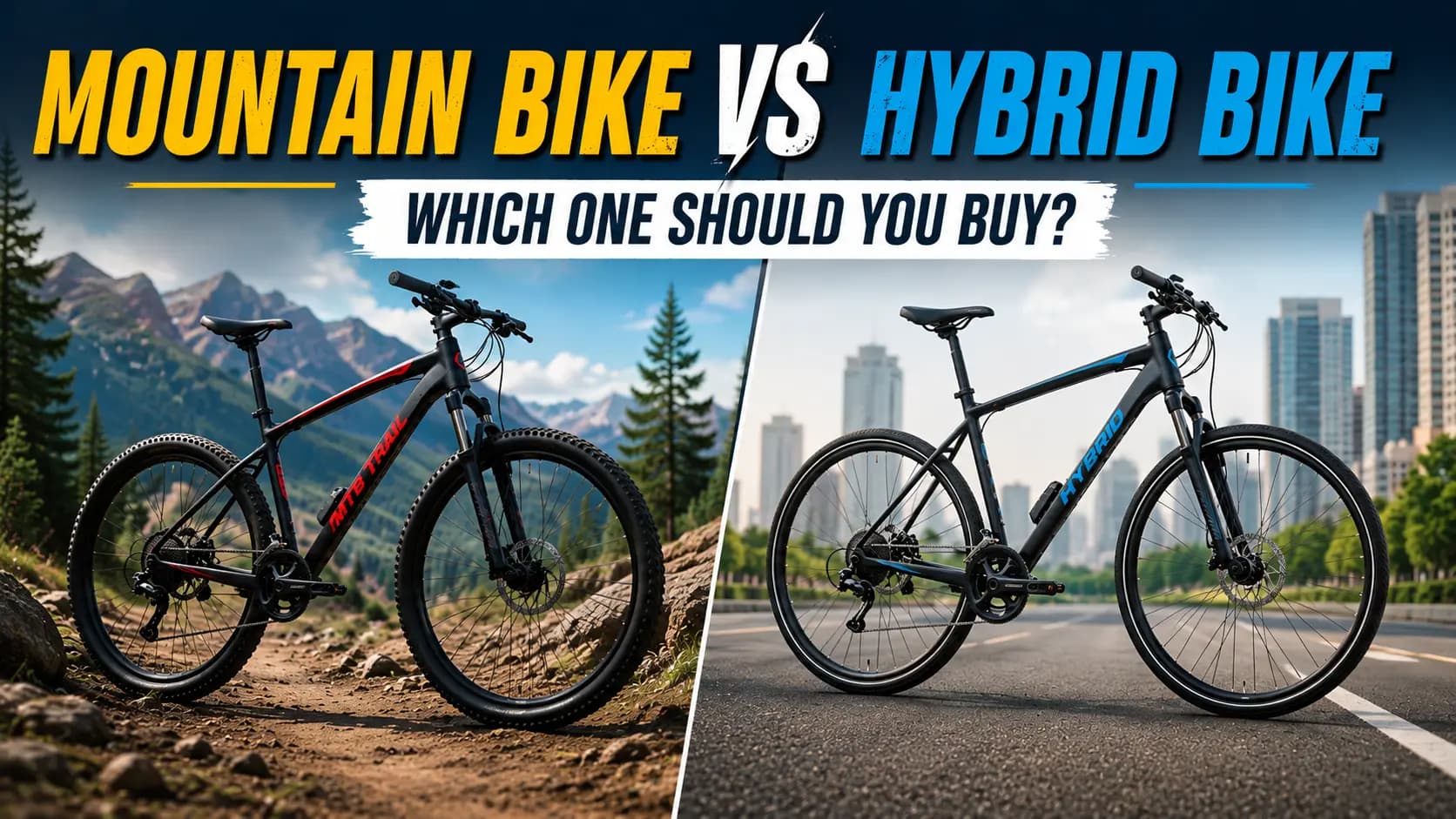

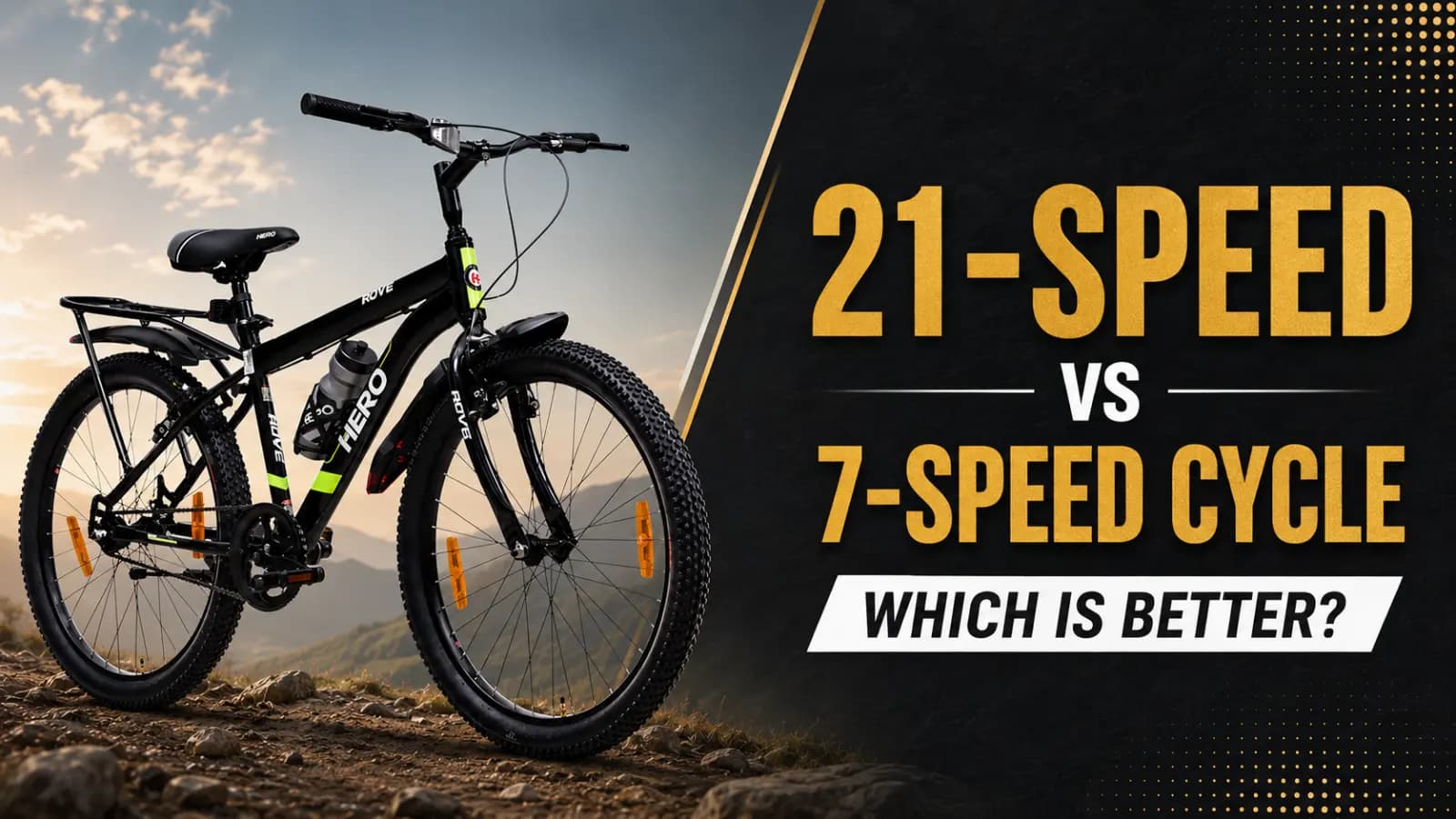
However, more gears do not automatically make a cycle faster or better. The right option depends on where you ride, how often you cycle, and how much maintenance you are comfortable with.
What Is a 7-Speed Cycle?
A 7-speed cycle generally has one chainring at the front and seven cogs at the rear, giving the rider seven gear options.
Lower gears make pedalling easier when starting or climbing a slope. Higher gears help you travel more efficiently on flat roads. Since the system usually has only one gear shifter and one derailleur, it is simple for beginners to understand.
A 7-speed bicycle is suitable for:
Daily rides to school, college, or work
Short fitness and recreational rides
Flat or moderately uneven city roads
Beginners learning how bicycle gears work
Riders who want simpler maintenance
For regular cycling around Mumbai neighbourhoods, a 7-speed cycle often provides enough flexibility without making gear selection complicated.
What Is a 21-Speed Cycle?
A traditional 21-speed bicycle normally uses three front chainrings and seven rear cogs. Multiplying 3 × 7 gives 21 possible gear combinations.
However, this does not mean that every combination provides a completely different gear ratio. Some ratios overlap, while extreme combinations should be avoided because they place the chain at an angle. This is known as cross-chaining, which can increase noise, friction, and drivetrain wear.
The wider gear range still gives riders more control over their pedalling effort. A low gear can make climbing easier, while a high gear can support faster riding on open and flat roads.
A 21-speed cycle is useful for:
Hilly routes and flyovers
Long-distance cycling
Fitness and weekend rides
Mixed city and off-road terrain
Riders who want greater control over cadence
For example, a cycle such as the 26T Krueger 21 Speed provides a 21 Speed Shimano gear system for everyday and outdoor riding.
7-Speed vs 21-Speed Cycle: Quick Comparison
Feature | 7-Speed Cycle | 21-Speed Cycle |
Typical setup | 1 front × 7 rear | 3 front × 7 rear |
Gear operation | Simple | Requires more practice |
Best terrain | Flat and moderate roads | Flat, hilly, and mixed terrain |
Maintenance | Relatively easier | More components to maintain |
Weight | Often slightly lighter | May be slightly heavier |
Best for | Beginners and commuters | Fitness and adventure riders |
Gear range | Limited | Wider |
The exact performance will also depend on the gear ratios, tyre size, cycle weight, frame geometry, and component quality.
Is a 21-Speed Cycle Faster Than a 7-Speed Cycle?
Not necessarily. The number of gears mainly affects your ability to match your pedalling effort to the terrain. It does not directly decide the bicycle’s maximum speed.
Your actual speed depends on:
Fitness and pedalling power
Gear ratios
Cycle and rider weight
Tyre pressure and rolling resistance
Road surface, wind, and traffic
Riding position
A fit rider on a properly maintained 7-speed cycle may easily ride faster than a beginner on a 21-speed MTB.
Gears help you maintain a comfortable cadence, meaning the number of pedal revolutions per minute. Cycling UK recommends aiming for approximately 60–90 RPM during normal riding, although the ideal cadence varies by rider and conditions. Changing gears helps maintain that rhythm when the road becomes steeper or flatter.
Which Cycle Is Better for Hills?
A 21-speed cycle is generally the more flexible choice for frequent hills because its front and rear gear combinations can provide a wider range.
Shift into a lower gear before reaching the climb. This reduces the force required for each pedal stroke and helps you maintain momentum. Avoid waiting until you are already struggling, as changing gears under heavy pedal pressure can result in rough shifting.
A 7-speed cycle can still handle small slopes and flyovers, provided its lowest gear ratio is suitable. The actual number of teeth on the front chainring and rear cogs matters more than the speed label alone.
A Simple Framework for Choosing
Use this quick Route–Ride–Responsibility framework:
Route: Choose 7-speed for mostly flat roads. Consider 21-speed for hills and mixed surfaces.
Ride: Choose 7-speed for short, relaxed journeys. Pick 21-speed for longer fitness or outdoor rides.
Responsibility: Choose 7-speed if you want simpler operation. Pick 21-speed if you are comfortable learning front and rear shifting.
Also check the frame size, wheel size, brakes, tyre type, suspension, and after-sales support before buying.
Final Verdict: Should You Buy a 7-Speed or 21-Speed Cycle?
Choose a 7-speed cycle if you want an easy-to-use bicycle for commuting, casual exercise, or shorter city rides.
Choose a 21-speed cycle if you regularly face hills, ride longer distances, or want more control across changing terrain.
Do not choose based only on the larger number. Test the cycle, check whether the frame fits your height, and consider your regular route before making the final decision.
Visit Golden Toys & Cycles in Goregaon, Mumbai to compare geared cycles and find the right option for your route, height, and budget.